Wordle Hints Today: Daily Clues, Answer, and Ultimate Strategy Guide
The daily Wordle puzzle has transformed from a simple software engineer's gift into a global phenomenon that dictates the morning routines of millions. This comprehensive guide provides the essential Wordle Hints Today: Daily Clues, Answer, and Ultimate Strategy Guide to help players maintain their streaks while sharpening their linguistic intuition. By understanding the mathematical underpinnings and tactical nuances of the game, players can transition from casual guessing to consistent, high-level performance. 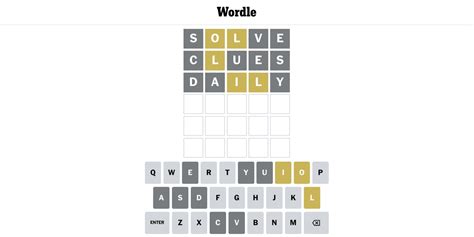
The Evolution of a Global Daily Ritual
Originally developed by Josh Wardle for his partner, Wordle was acquired by The New York Times in early 2022, cementing its status as the premier daily word game of the digital age. Its simplicity—six attempts to guess a five-letter word—belies a deep complexity that engages the brain's logic and vocabulary centers. The game’s brilliance lies in its scarcity; with only one puzzle available every 24 hours, it fosters a sense of communal participation. As digital culture critic James Roberts notes, "The genius of Wordle lies in its constraints. By limiting players to one puzzle a day, it creates a shared communal experience that is rare in the modern, fragmented internet."
The shift to The New York Times platform brought with it a more curated word list and the introduction of the WordleBot, an analytical tool designed to provide players with a post-game breakdown of their efficiency. This evolution has turned Wordle into more than just a game; it is now a competitive yet solitary pursuit of linguistic perfection. For those seeking Wordle hints today, the objective is often not just to find the answer, but to understand the most efficient path to it, preserving that coveted "X/6" success rate.
Deciphering the Wordle Grid: A Technical Overview
To master Wordle, one must first understand the feedback loop provided by the colored tiles. A green tile indicates the correct letter in the correct position, a yellow tile signifies the letter is in the word but in a different spot, and a gray tile means the letter is not present at all. While these rules are straightforward, the underlying logic requires a grasp of letter frequency and positional probability. In the English language, certain letters like E, A, R, I, and O appear with much higher frequency than others, such as X, Q, or Z.
Effective play involves a process of elimination. Each guess should ideally maximize the amount of information gained. This is why "burning" a turn on a word with repeated letters (like "ROBOT" if you haven't confirmed the 'O' placement) is generally discouraged in the early stages. Instead, players should focus on high-yield consonants and vowels. The goal of using daily clues is to narrow down the thousands of possible five-letter words to a manageable handful by the third or fourth attempt.
Optimized Starting Words: The Mathematical Edge
The most debated aspect of Wordle strategy is the "best" starting word. Computational linguists and data scientists have run simulations to determine which words provide the highest statistical advantage. Common favorites include:
- CRANE: Often cited by the NYT WordleBot as the most efficient starter due to its use of common consonants and vowels.
- ADIEU: A favorite for players who prefer to eliminate four vowels (A, D, I, E, U) immediately.
- STARE: Excellent for testing the common 'ST' blend and frequent vowels.
- AUDIO: Similar to ADIEU, it targets vowels but uses different consonants.
- SLATE: A high-probability word that covers some of the most common positions for its constituent letters.
Choosing a starting word is a matter of personal philosophy. Some players prefer a "vowel-heavy" approach to identify the word's skeleton, while others prefer "consonant-heavy" words to identify its structure. Regardless of the choice, the first word sets the trajectory for the entire puzzle. Using a consistent starter allows a player to become familiar with how the game responds to those specific letters, making the second and third guesses more intuitive.
Navigating the 'Hard Mode' Dilemma
Wordle offers a "Hard Mode" setting, which forces players to use any identified hints in all subsequent guesses. While this might seem like the "correct" way to play, it introduces a significant risk known as the "trap pattern." This occurs when a player identifies four out of five letters, but the word has numerous variations (e.g., _IGHT could be LIGHT, NIGHT, FIGHT, SIGHT, MIGHT, or RIGHT). In standard mode, a player can use a "throwaway" word like "FLING" to test multiple consonants at once. In Hard Mode, you are forced to guess them one by one, which can easily lead to a loss if you have more possibilities than remaining turns.
To survive Hard Mode, players must be extremely cautious with words that have many rhyming neighbors. The ultimate strategy guide for Hard Mode involves identifying these patterns early and attempting to eliminate as many variables as possible before committing to a specific word structure. It requires a deeper level of foresight and a willingness to play defensively rather than aggressively hunting for the green tiles.
Wordle Hints Today: Daily Clues and Deductive Reasoning
When searching for Wordle hints today, players are usually looking for a nudge in the right direction without having the answer spoiled. Effective clues often focus on the following categories:
- Vowel Count: Knowing if a word has one, two, or three vowels can drastically change your approach.
- Repeated Letters: Many players forget that a letter can appear twice (e.g., "ABBEY" or "PRESS"). A hint regarding a double letter is often the most helpful piece of information.
- Starting/Ending Letters: Identifying the first or last letter can help visualize the word's structure.
- Part of Speech: Knowing if the word is a noun, verb, or adjective can help filter your internal dictionary.
Deductive reasoning is the player's greatest tool. If you know the word contains an 'L' and an 'R' but not in the second or third spots, and the vowels are 'E' and 'A', your brain begins to filter patterns like "LEARN" or "REARE." The process of "mental Wordling" between guesses is where the real skill is developed. It is a game of patience as much as it is a game of vocabulary.
The Role of the NYT WordleBot in Skill Development
After completing the daily puzzle, the New York Times offers a tool called WordleBot. This AI-driven assistant analyzes your choices and compares them to the "optimal" play. It provides a score for "Skill" and "Luck." While it can be humbling to see that the bot would have solved the puzzle in three moves while you took five, it is an invaluable teaching tool. It highlights when you made a "redundant" guess—a word that included a letter you already knew was incorrect—and suggests better alternatives for your specific situation.
By reviewing these post-game analytics, players can identify their own cognitive biases. For example, some players consistently overlook the letter 'Y' as a vowel-substitute at the end of words, while others struggle with words that start with 'S' blends. The WordleBot turns a simple daily diversion into a measurable skill that can be improved over time.
Beyond the Game: The Psychological Appeal of Wordle
Why has Wordle remained popular while other flash-in-the-pan games fade? Psychologists suggest it fulfills a basic human need for "micro-achievements." In an increasingly complex world, solving a small, logic-based puzzle provides a dopamine hit and a sense of order. Furthermore, the "spoiler-free" sharing format—the grid of colored squares—allows for social interaction without ruining the fun for others.
As we look at Wordle hints today, we see a community bound by a shared challenge. Whether you are a casual player or a statistical strategist, the game offers a moment of quiet focus. "It’s the digital equivalent of a morning cup of coffee," says linguist Sarah Miller. "It wakes up the linguistic pathways and provides a small victory before the day's real challenges begin." By following the strategies outlined in this Ultimate Strategy Guide, you ensure that your daily ritual remains a source of satisfaction rather than frustration.
Mastering the daily puzzle requires a blend of luck, logic, and a deep reservoir of five-letter words. By utilizing smart starting words, understanding the pitfalls of Hard Mode, and leveraging tools like the WordleBot, you can maintain your streak indefinitely. Remember that every guess is a piece of data; use it wisely to uncover the Wordle answer and celebrate the small win that comes with every successful solve.